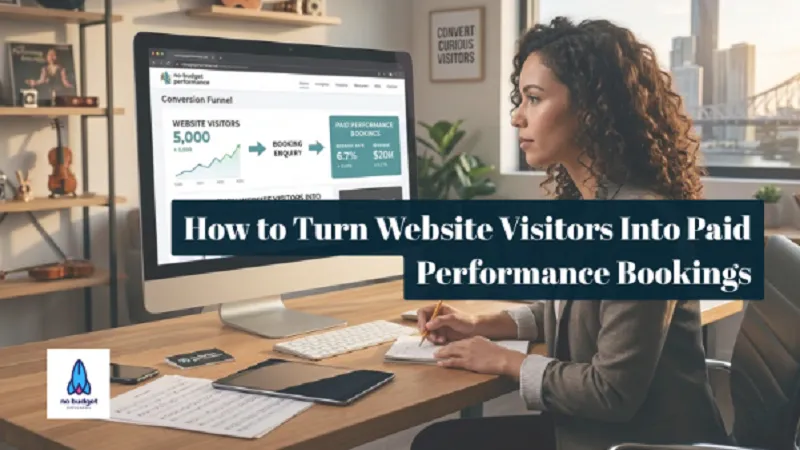
To turn website visitors into paid performance bookings, you need to stop letting your site work against you. A lot of visitors land on your page, look around briefly, and leave without sending a single enquiry. And more often than not, your performance has nothing to do with it.
That stings, especially when you’ve spent years building your performance career. It’s a problem we’ve solved for plenty of Brisbane performers, and to learn more about what we do, visit www.nobudgetperformance.net.
In this article, we cover why visitors leave without enquiring, how to fix your booking form, how to map your customer journey, and talk about real case studies.
Stick around, it’s all here.
Conversion Starts Long Before the Booking Form
Before a visitor ever sees your booking form, two things have already shaped their decision: how fast your page loads and what your headline says.
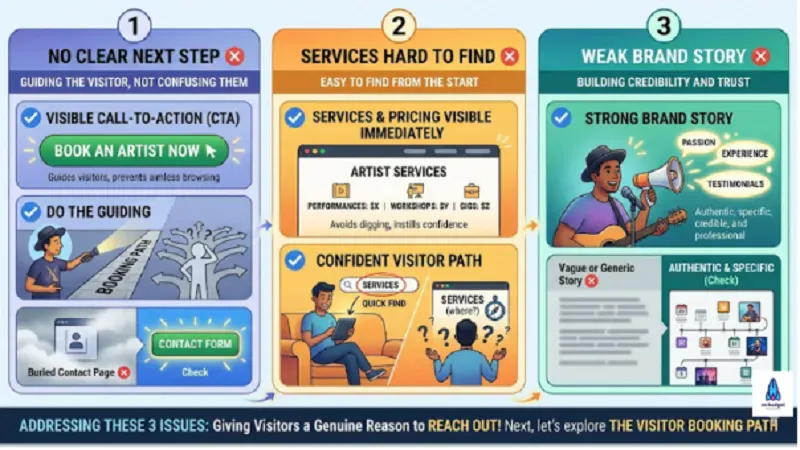
Let’s jump into the details:
Your Headline Sets the Tone
Your headline is the first thing visitors read, and it needs to tell them immediately what you perform and who you perform for. A vague or generic headline loses visitors before they even scroll down.
Our experience tells us that performer websites that use a specific, event-focused headline consistently see visitors stay on the page longer and enquire more often (Spoiler: “Welcome to my website” doesn’t cut it).
Slow Pages Cost You Sales
A slow website loses sales before a single word is read. In person, you’d never make a client wait ten seconds before introducing yourself, and your website shouldn’t either.
According to GreetNow, the average website converts just 2.35% of visitors, but top performers reach five times that rate, and page speed is one of the most common factors separating them.
Sort both of those out, and your booking form finally has a chance to do its job.
How to Map the Customer Journey to More Bookings
To map your customer’s journey, start by tracking what your visitors see, read, and do before they decide to book. Most performer websites skip straight to the booking form and ignore everything that leads up to it, and that’s exactly where the enquiries dry up.
Here’s a touchdown on what each stage needs:
- Awareness Stage: Your landing page needs one clear headline that covers what you do, your experience, and the types of events you’re available for. A well-structured landing page is one of the most reliable ways to improve your traffic-to-lead conversion rate, so getting this right early pays off.
- Keep Visitors Interested: Once visitors are interested, they look for proof. A short performance reel, specific client testimonials, and a list of event types you cover give them everything they need to feel confident reaching out.
- Booking Made Easy: Visitors at this stage just need a clear next step. A visible call to action, easy-to-find contact details, and a short form are all it takes. What’s more, every extra barrier you add at this point costs you a booking.
When each stage works together, visitors don’t need to be convinced. They’re already ready to book.
The Booking Form Mistakes That Kill Your Enquiry Rate
The most common booking form mistakes are too many fields, a vague call to action, and no clear next step after submitting. To put that in perspective, if your form has eight fields, most people bail by field three.
Here’s what to fix first:
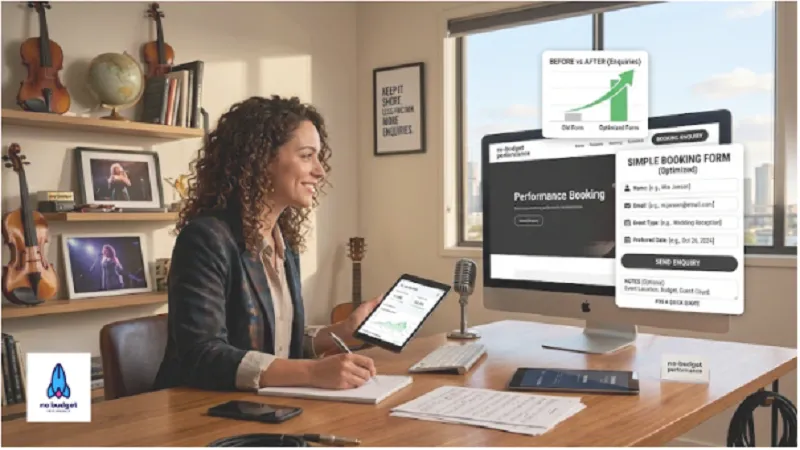
- Too Many Fields: Our experts always suggest limiting your form to four fields: name, event type, preferred date, and contact number. It’s because in our experience, shorter forms produce faster responses from corporate functions and private event organisers.
- Vague Call to Action: Clarity is important as well. So, replace “Submit” with something specific. For example, “Check My Availability” tells visitors exactly what happens next, and that alone lifts form submission rates across performer websites.
- No Clear Next Step: After submission, tell visitors when to expect a response. A simple confirmation message like “We’ll get back to you within 24 hours” reduces doubt, stops potential clients from contacting competitors, and builds trust before you’ve even spoken.
The performers we’ve worked with who addressed all three of these consistently found that enquiries required far less follow-up to convert into confirmed bookings.
Case Studies: How Performers Got More Bookings Online
After auditing dozens of performer websites, we keep seeing the same four problems arise. Slow pages, unclear headlines, long booking forms, and no follow-up process are costing performers bookings every single day.
And every one of them has a straightforward fix:
| Problem | Fix Applied | Outcome |
| Overloaded booking form | Reduced to 4 fields: name, event type, preferred date, contact number | Enquiry rate improved significantly |
| No clear call to action | Added “Check My Availability” button above the fold | Notable increase in form submissions |
| Slow, non-mobile website | Compressed images, switched to a mobile-friendly layout | Bounce rate dropped noticeably |
| Vague homepage headline | Rewrote to state performance type and event specialisation | Visitors stayed on the page longer |
What’s even more interesting, the performers who fixed these issues stopped losing bookings immediately. Once those gaps were closed, their existing traffic started converting into real enquiries and paid bookings, without spending a single extra dollar on advertising.
How to Build a Performer Marketing Funnel That Converts
A performer marketing funnel is the system that keeps new leads coming in and existing customers coming back, long after they’ve left your website. Through working with Brisbane performers, we’ve seen it become the single most consistent driver of repeat bookings.
To build one, you need to focus on three things: attracting the right audience, nurturing them with targeted content, and retaining clients after the first booking:
- Attract New Leads: Focus your digital marketing on branded search, local event directories, and social platforms where event organisers spend time. And let’s be honest, when you build awareness consistently, your audience grows with the right people rather than just random traffic.
- Nurture With Targeted Campaigns: Once potential clients find you, keep them engaged. Our experts recommend campaigns that highlight your performances and client testimonials, giving potential clients the confidence they need to reach out.
- Retain and Rebook: Keep in mind, existing customers are your most valuable leads. A simple follow-up email after each event, combined with a seasonal campaign, keeps you front of mind when they’re ready to book again, and turns one booking into several over time.
A strong funnel doesn’t just fill your calendar once. It creates a repeatable system that drives consistent bookings across every season.
Ready to Stop Losing Bookings to a Slow Website?
Most performer websites are losing bookings every single day. The fixes are simpler, and none of them requires starting from scratch. As we mentioned earlier, small, specific changes to your site can change passive visitors into paying clients.
In this guide, we covered your customer journey, booking form optimisation, real case studies, and building a performer marketing funnel. Each piece connects to the next, forming a clear path from website traffic to confirmed bookings.
If you are still unsure, our team at NoBudgetPerformance will walk you through every step you need to get your website converting and your enquiry rate climbing. We know exactly where performer websites lose bookings, and we’re here to help you fix it for good.