
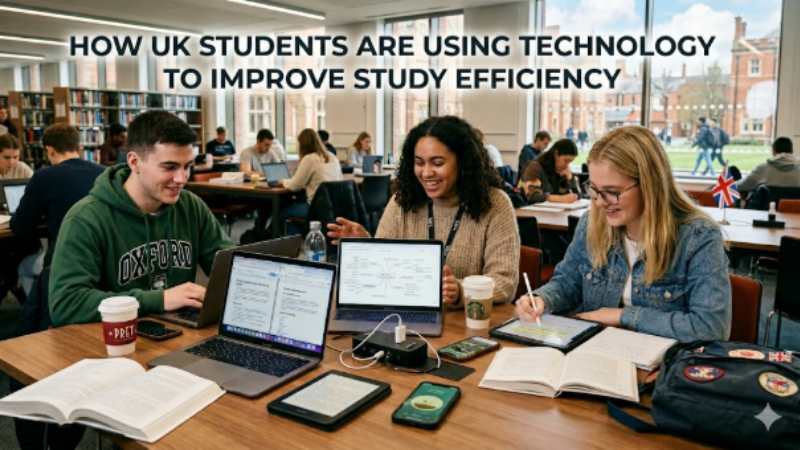
The academic landscape in the United Kingdom has undergone a seismic shift over the last decade. Gone are the days when a heavy backpack filled with ring binders and printed textbooks was the sole hallmark of a dedicated student. Today, from the lecture halls of Oxford and LSE to Sixth Form colleges in Manchester, the “digital-first” approach is the new standard.
As the curriculum becomes more demanding and the competition for university places and graduate roles intensifies, UK students are turning to technology not just as a convenience, but as a strategic necessity. This article explores the sophisticated ways high school and university students across Britain are leveraging digital tools to maximize their study efficiency.
1. The Rise of the Paperless Student
One of the most visible changes in UK education is the transition to digital note-taking. High school and A-Level students are increasingly swapping traditional notebooks for tablets equipped with styluses. Tools like Notability and GoodNotes allow students to annotate PDF handbooks and past papers directly.
This is particularly efficient for STEM and business students who need to sketch diagrams or map out complex case studies. For those struggling with the technicalities of consumer behavior or market analysis, seeking professional marketing assignment help can provide the necessary templates to organize these digital notes effectively. The ability to sync these notes across devices means a student can review their diagrams on their phone during a commute on the London Underground, turning “dead time” into productive revision sessions.
2. Artificial Intelligence as a Personal “Co-Pilot”
Perhaps the most significant leap in study efficiency has come from the integration of Artificial Intelligence (AI). While there is much debate surrounding AI in academia, UK students are increasingly using it as a “co-pilot” for learning rather than a shortcut for cheating.
AI-powered platforms help students break down complex topics. For instance, if a student struggles to understand Keynesian economics or the nuances of Shakespearean sonnets, they use AI to summarize dense texts into bullet points or to generate practice questions based on their specific exam board syllabus (AQA, OCR, or Edexcel).
In 2026, the focus has shifted toward Agentic Literacy—the ability to direct AI agents to find peer-reviewed sources or cross-reference historical dates, ensuring that the student remains the architect of their own research. This “Active Recall” method, powered by AI, ensures that students are testing their knowledge rather than just passively reading, which is scientifically proven to increase long-term retention.
3. Personalized Learning and External Academic Support
The pressure to achieve top grades—specifically the A* at A-Level or a First-Class degree—has led many UK students to seek specialized assistance. The internet has democratized access to expert help, especially during peak exam seasons when time is the most valuable commodity.
When deadlines overlap, many students find it more efficient to pay someone to do assignment tasks that involve repetitive data entry or formatting, allowing them to focus on high-level analysis and critical thinking. Platforms like Myassignmenthelp provide the necessary scaffolding to understand complex requirements and high academic standards.
By accessing model papers, students can see “what good looks like” in a professional context. This reduces the hours spent staring at a blank page, allowing them to focus on mastering the subject matter. This form of “targeted learning” is a major efficiency booster for those balancing multiple subjects, T-Level industry placements, or part-time work.
4. Collaborative Tools and the Virtual Study Group
The UK’s “lonely scholar” trope is being replaced by digital collaboration. Platforms like Microsoft Teams and Slack are no longer just for the corporate world; they are the hubs of student group projects. Cloud-based collaboration via Google Workspace or Office 365 allows multiple students to work on a single presentation or lab report simultaneously.
Furthermore, digital “Studygrams” and “StudyTube” communities provide a sense of accountability. “Study with me” live streams on YouTube or TikTok are surprisingly popular among UK students, providing a virtual library environment that encourages deep focus and reduces the feeling of isolation during exam seasons.
5. Gamification of the National Curriculum
Revision can be tedious, but technology has introduced an element of “gamification” that keeps students engaged. Apps like Quizlet and Anki use spaced repetition algorithms to show students flashcards right before they are likely to forget the information.
In the UK, many students use Seneca Learning, which is specifically tailored to the UK National Curriculum, GCSEs, and A-Levels. These platforms turn syllabus content into interactive quizzes. By competing for high scores, students stay motivated longer than they would with a highlighter and a textbook. For younger students or those in Sixth Form, this “low-stakes testing” significantly lowers exam anxiety by making the recall process feel like a game rather than a chore.
6. Managing Cognitive Load and the “Focus Bubble”
Efficiency isn’t just about working faster; it’s about working smarter. The digital age brings distractions, but it also provides the cure. UK students are increasingly using Focus Apps like Forest or Freedom to lock their social media during study sessions.
The Pomodoro Technique—working for 25 minutes followed by a 5-minute break—is a staple in UK dorms. Digital Pomodoro timers help students maintain a high level of cognitive function throughout the day, preventing the burnout that often comes with “cramming.” Additionally, noise-canceling technology and “Lo-fi” study playlists on Spotify have become the unofficial soundtrack to British education, helping students create a “focus bubble” even in noisy shared housing or busy cafes.
7. Digital Organization and Project Management
Managing three or four A-Levels, or a modular degree program, requires high-level project management. UK students are moving away from paper planners toward apps like Notion and Trello. These tools allow students to create “Study Dashboards” where they can track assignment deadlines, store research links, and monitor their progress through a syllabus. By visualizing their workload, students can prioritize tasks effectively, ensuring that high-stakes assignments get the time they deserve.
8. Accessibility and Inclusive Learning
Technology has been a game-changer for accessibility in the UK. For students with dyslexia, ADHD, or visual impairments, tools like Grammarly, Otter.ai (for live transcription of lectures), and screen readers have leveled the playing field. Speech-to-text technology allows students to “dictate” their first drafts, which is often faster and less intimidating than typing. These assistive technologies ensure that every student, regardless of their learning needs, can reach their full academic potential.
9. Immersive Learning: VR and T-Levels
While still in the early stages, Virtual Reality (VR) is making waves in UK medical, engineering, and architecture schools. Instead of just reading about structural integrity, students can explore a 3D model.
Similarly, the introduction of T-Levels has brought a new dimension to study efficiency. These qualifications require a blend of classroom learning and industry placement. Technology allows these students to maintain a “hybrid” workflow, using cloud-based portfolios to document workplace achievements instantly, ensuring they meet the rigorous assessment criteria without bulky physical folders.
10. Navigating the Cost of Digital Education
In the current economic climate, UK students also use tech to manage their budgets. Platforms like UNiDAYS and Totum provide digital access to significant discounts on hardware and software. By leveraging these platforms, students can afford the premium versions of productivity tools, ensuring their “digital toolkit” is both powerful and affordable.
Frequently Asked Questions
Q.1 How is the shift toward “Digital Exams” affecting study habits in the UK?
With major UK exam boards like AQA and Pearson piloting digital exams for GCSEs and A-Levels, students are shifting their focus from handwriting speed to typing proficiency and digital literacy. Efficiency now involves mastering the digital interfaces used in assessments. Students are using platforms that mimic these exam environments to ensure that their “exam-day” performance isn’t hindered by a lack of familiarity with the software.
Q.2 Are there specific digital tools for the UCAS application process?
Yes. For the 2026/27 cycle, students are using Unifrog and the UCAS Hub to streamline their university searches. To draft the Personal Statement (or the newer “Modular Questions”), students often use AI-driven brainstorming tools to map out their experiences against course requirements. Digital “UCAS Trackers” in Notion are also highly popular for monitoring application deadlines and interview invitations across multiple universities.
Q.3 How can UK students use technology to manage “Eco-Anxiety” and Paper Waste?
The “Paperless Student” movement isn’t just about efficiency; it’s about sustainability. By switching to digital textbooks via platforms like Perlego or Kortext, UK students are significantly reducing their carbon footprint. Digital note-taking eliminates the need for thousands of pages of paper and plastic-heavy stationery, aligning academic success with the environmental values held by many in the Gen Z and Gen Alpha cohorts.
Conclusion
For students in the UK, technology has transformed study from a static activity into a dynamic, personalized process. By embracing AI, collaborative platforms, and digital organization, students are finding ways to navigate the increasing demands of the modern curriculum with greater ease. Whether it’s utilizing expert resources like Myassignmenthelp.com for revision, the goal is the same: academic excellence in a digital world.
About the Author Drake Miller
I am a dedicated blog author driven by a passion for helping students achieve academic success. My writing focuses on breaking down complex concepts into simple, easy-to-understand ideas, making learning more accessible and less overwhelming. I share practical insights, effective study techniques, and expert tips that empower students to improve their performance.