
In the bustling digital marketplace, where everyone’s vying for attention, just showing up isn’t enough. You might have a brilliant product or service, but if your paid ad strategy isn’t sharp, you’re essentially shouting into a hurricane. This is where competitive analysis becomes a critical component that shapes a truly effective PPC strategy. It’s about understanding the battlefield before you charge in, ensuring your Adword Management Services are investing wisely. You wouldn’t play chess without knowing your opponent’s moves, and the same logic applies to Google Ads campaigns. Ignoring competitors is like playing blindfolded. You’re missing crucial intel that can inform keyword strategy, ad copy, bidding, and unique selling propositions. It’s not about copying, but learning, adapting, and ultimately outperforming.
Identifying Competitors
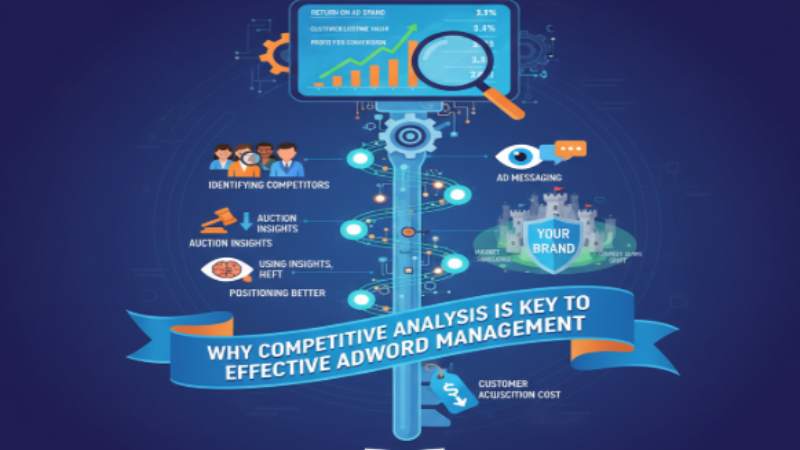
Before analyzing, you need to know who you’re actually up against. Sometimes, the obvious competitors aren’t the only ones vying for ad space. Google Ads provides tools to uncover hidden competitors and understand their strategies. It’s about looking beyond the usual suspects and digging into the data that shows who’s truly competing for your target audience’s clicks.
Auction Insights
One of the most powerful, yet sometimes underutilized, reports within Google Ads is Auction Insights. This report shows who else is participating in the same ad auctions as you and how they’re performing relative to your campaigns. You’ll see metrics like Impression Share, Overlap Rate, Position Above Rate, Top of Page Rate, and Outranking Share.
If a competitor has a high Impression Share and a high Position Above Rate, it means they’re consistently showing up and often above you. This insight can signal aggressive bidding, a strong Quality Score, or both. Conversely, if you see a competitor with a high Overlap Rate but low Outranking Share, they’re in the auction often but not necessarily winning. This helps you identify who’s serious and who’s just dabbling, allowing you to fine-tune your Google Ads management approach.
Ad Messaging
Once you’ve identified your true ad competitors through Auction Insights, the next step is to scrutinize their ad messaging. What are they saying? How are they saying it? And what offers are they putting forward?
This involves actively searching for the keywords you target and observing the ads that appear. Look at their headlines, descriptions, call-to-actions (CTAs), and any ad extensions they’re using. Are they highlighting specific features, pricing, guarantees, or unique benefits? Are they using scarcity tactics or social proof?
By dissecting their ad copy, you can spot trends, identify gaps in their messaging, and find opportunities to differentiate your own. Perhaps they’re all focusing on price, and you can pivot to emphasize quality or customer service. Or maybe they’re missing a compelling CTA that you can leverage. Understanding their communication style is crucial for crafting ad copy that truly stands out in a crowded search results page.
Using Insights
Gathering data is only half the battle. The real impact comes when you translate those insights into actionable strategies. It’s like having a treasure map; you need to actually follow it to find the gold. This is where a strategic approach to Google Ads management truly shines, turning raw competitive data into a refined plan for success.
Positioning Better
With a clear understanding of your competitors’ presence from Auction Insights and their messaging from ad copy analysis, you’re now equipped to position your own campaigns more effectively. This isn’t about direct imitation, but about strategic differentiation.
If you notice a competitor consistently dominating position one for a high-value keyword, you might either strategically outbid them if the ROI makes sense or pivot to targeting long-tail keywords where competition is less fierce and conversion intent might be higher. Think with Google emphasizes the importance of a data-driven approach to differentiate your strategy, highlighting that understanding your competitive landscape is paramount.
You can refine your keyword strategy by identifying gaps your competitors aren’t exploiting. Are there niche terms or specific product variations they’re overlooking? Your ad copy can also become a powerful differentiator. If everyone else is touting “best prices,” you could focus on “unmatched quality” or “superior customer support.” Your landing pages should also reflect this differentiation, providing a seamless and unique user experience that reinforces your value proposition.
Leveraging expert Adword Management Services can help you quickly identify these opportunities and implement sophisticated strategies to pivot and improve your campaign performance, ensuring every ad dollar works harder. Ultimately, competitive analysis empowers you to make informed decisions about where to allocate your budget, which keywords to target, how to craft compelling ad copy, and what landing page experiences will convert best. It transforms your Google Ads strategy from a guessing game into a calculated, strategic play.
Key Takeaways
- Competitive analysis is fundamental for shaping an effective PPC strategy, offering crucial insights beyond basic market research.
- Google Ads’ Auction Insights report helps identify true ad competitors and understand their relative performance in auctions.
- Analyzing competitor ad messaging (headlines, CTAs, offers) reveals their unique selling propositions and uncovers opportunities for differentiation.
- Translating competitive insights into actionable strategies allows for better keyword selection, ad copy, bidding, and landing page optimization.
- Strategic positioning, informed by competitor analysis, enables you to either challenge dominant players or carve out profitable niches.
Conclusion
Competitive analysis isn’t a one-time task; it’s an ongoing, dynamic process that’s vital for sustained success in the ever-evolving world of paid advertising. By consistently monitoring your competitors and adapting your Google Ads agency strategy, you’re not just reacting to the market; you’re proactively shaping your own success. It’s about moving beyond assumptions and making data-driven decisions that give you a tangible edge, ensuring your campaigns are not just running, but truly thriving.